
Month: February 2024
Transformation, Diversity, and Equality in Water Polo
“Water polo holds a unique position among team sports to lead the way in advancing transformation, diversity, and equality within aquatics. SSA Water Polo has set targets for increasing the representation of black players on the National Team, aiming to mirror South Africa’s demographics. While progress has been made in meeting these targets, there remains a concern that black players do not always receive enough playing time. To address this issue, the Technical Committee (TC) proposes holding an Indaba to discuss equal playing time with coaches and managers. The goal is to develop a holistic and inclusive approach that aligns with our mission of transforming the sport.” Swim South Africa’s Annual report 2020/221
However, there are challenges and criticisms. Some, as I do, see water polo as unfairly singled out for SSA transformation efforts, questioning why other disciplines are not subjected to similar requirements. Perhaps it is because “the clock” is colour blind? It is argued that skills in swimming and water polo require dedicated coaching and training over many years, making strict timed quotas impractical unless participants have achieved an acceptable level of competency. Thankfully, many players of colour (hate the terminology) are great players with incredible skills.
The nature of the game dictates playing the best player/s given the opposition faced. Most of us will remember “walking” at tournaments. Certainly, “carrying the towels” focused my mind and made me more determined to train harder and earn my spot in the team. In other words, you do not pitch up at a pool and declare your intent to play water polo. Something SSA seem oblivious to.
International teams take seven to tens years to prepare a team to “compete”, not “participate”, at the Olympic games. Selecting a team a few days or weeks before the event, dishonour’s the players, the competition hosts and the teams competing.
Despite these challenges, there is a call for a change in mindset at SSA. It is suggested that SSA should empower players, stakeholders and enthusiasts to take a more active role in shaping the future of water polo. The current approach of timed participation quotas based on race is seen as illogical and counterproductive.
Instead, the focus should be on providing opportunities for players of all backgrounds to excel in a supportive and competitive environment. I would love to see Ivica Tucak (Croatia) or Sandro Campagna (Italy) complying with this ridiculous suggestion. “Water-time” is earned, dependent on the players ability and preparation. Handicapping a side, based on race, is illogical and simply does not work. Providing players of colour opportunity to find “their way” as a water polo players, in a structure that brings out their best, is surely a better option.
Personal experiences highlight the journey of a water polo player, showcasing the hard work and dedication required to succeed. The mention of past structures, like the Kramer league, provincial Currie Cup, structured leagues and open water polo tournaments could again provide the platform for players from smaller provinces and players of colour to showcase their talent. Past structures serve as a reminder of what can be achieved with the right support and opportunities.
In conclusion, while the path to transformation, diversity, and equality in water polo may require re-evaluation and adjustments, the goal of creating a sport that is inclusive and reflective of South Africa’s demographics remains paramount.”
Time to hold Adriaanse and Swim South Africa accountable for the “debacle” that is South African Water Polo!
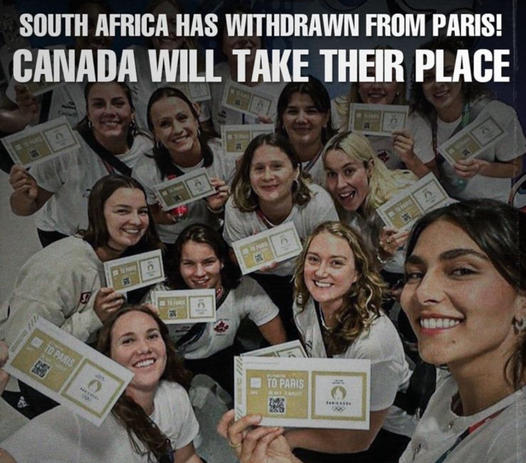
Considering South Africa’s unfortunate absence from the upcoming 2024 Olympics in France, it is imperative to address the underlying issues that have hindered their participation. Despite the efforts of our teams in Doha, the lack of preparation and mismanagement by Swim South Africa led to our failure to secure a top 12 spot, as required for qualification (bullshit but understandable).
It is now time to shift our focus to the future and ensure that such a situation does not recur. The Olympics should be a platform for the best teams to compete, not a stage for underprepared participation. Therefore, it is crucial for World Aquatics, particularly Canada and Romania (as gift recipients), to step up and assist South Africa in advancing their water polo ambitions.
While the decision by World Aquatics may have been made in consultation with South Africa, it is essential to understand the terms of this decision. Did money or benefits change hands (not uncommon when dealing with “injected, rather than elected” South African officials), was there a commitment from World Aquatics to help improve water polo infrastructure and development programs in Africa? Or was this merely a missed opportunity to hold South African Water Polo accountable for Swim South Africa’s shortcomings?
As former players and enthusiasts of the sport, we urge World Aquatics to grant us a voice in these discussions (Swim South Africa’s legitimacy as the only “representative” of South African Water Polo is rejected with contempt). It is time to hold Swim South Africa accountable and devise a comprehensive plan to foster the growth of water polo in Africa. This plan should not only prepare us for future Olympic tournaments but also allow those players who missed out on the 2024 Olympics to represent their country at the highest level in the future. Together, we can ensure that South Africa emerges as a competitive force in water polo on the world stage.
Adriaanse, Fritz and the entire SSA Board – time to get a new day job!
It’s time for change in South African aquatics. The current management team, including Adriaanse, Fritz, and the SSA Board, has failed to provide the necessary support and service to our aquatic disciplines. The practice of cadre deployment, where political affiliations take precedence over qualifications, has resulted in a leadership that serves the interests of the ANC and themselves, rather than the sport itself.
The Constitution of South Africa prohibits favouritism based on political affiliations in the public service. However, the ANC’s cadre deployment programme has infiltrated institutions like the department of Sport and Recreation, NOCSA, and SSA, compromising their effectiveness and independence.
The ANC’s motivations for cadre deployment, including extending its influence and advancing its political agenda, have hindered the progress of aquatics in South Africa. This system has led to poor leadership, lack of accountability, and a disregard for transparency in decision-making.
It’s time for a change. We, the proponents and participants of South African aquatics, demand the resignation of Adriaanse, Fritz, and the entire board. Additionally, we call on the government to launch an independent commission of inquiry, chaired by a representative from World Aquatics, to review South African Aquatics.
This inquiry should include a forensic audit into the federation’s finances, ensure accountability to participants and members, investigate the lack of transparency surrounding the decision to forego our 2024 Olympic births, address the lack of structure and planning at the senior level, and scrutinize the team and management selection processes among other things.
We cannot continue to tolerate the status quo. The cancellation of nationals for water polo is just one more symptom of a larger problem (yebo – Currie Cup this year). Change is needed now to ensure the future success and integrity of South African Aquatics.
NOTE: If you, like I love this sport, share this post. If you agree, or not, leave a comment. Become an activist for change (in our sport and society at large). Let’s drop our petty differences and demand change. SSA are nothing without you and me. Stand up you water polo men and women. NOW is the time to make a difference!
Swimming SA dashes water polo players’ Paris Olympics dreams despite teams qualifying
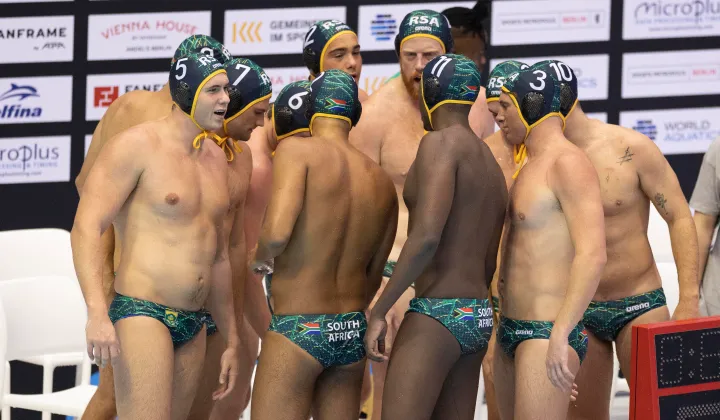
Despite qualifying for the Paris Olympics as Africa’s best, Swimming South Africa is not going to send the men’s or women’s water polo teams to the Games after their showings at the World Aquatics Championships this month.
South Africa’s elite water polo players were left gobsmacked this week when they learnt they would not be going to the 2024 Olympic Games in Paris.
Swimming South Africa (SSA) has withdrawn both the men’s and women’s water polo teams from the team to Paris because they are not realistic medal contenders. If that is the criteria, then 90% of Team South Africa should not be going to the Olympics.
To make matters worse, the players only heard through social media – and not official channels – that they wouldn’t be going to Paris.
This comes after they received barely any support from SSA in terms of training camps and funding.
SSA made the decision to remove the water polo teams from Olympic consideration due to their performances at the recent World Aquatics Championships in Doha, Qatar, which ended on 18 February.
The women’s team finished 14th out of 16 sides while the men finished 15th.
According to SSA, a minimum 12th place finish was required from both teams for them to consider taking up the continental spot. Instead, Romania and Canada will take the men’s and women’s places at the Olympic Games.
“For us to accept a continental slot, they had to achieve a top-12 ranking [at the World Aquatics Championships in Doha] and they did not achieve a top 12 ranking,” SSA chief executive Shaun Adriaanse told Daily Maverick.
Set up to fail
Just what SSA does to help prepare the water polo teams – other than sending out communiqués – is questionable.
One of the national water polo players Daily Maverick spoke to, but who wishes to remain anonymous, said that since the 2023 World Aquatics Championships in Fukuoka, Japan, last July, both teams had only a single training camp. That was in December 2023.
That training camp, held in Gqeberha, doubled up as a selection camp for the World Aquatics Championships which kicked off at the start of February.
The team was announced two weeks ahead of the 2024 Championships and trained together for the first time, for three days, in Johannesburg.
That was the week before the Championships began in Doha.
“The squads were finalised last year so they know more or less who will be in the team. So, I think they had adequate preparation,” Adriaanse said, without elaborating on what that “adequate preparation” entailed.
According to a player, they could not train as a team as all training camps must be approved by SSA before going ahead.
The selected players for the World Champs subsequently had to pay around R20,000 from their own pockets, on short notice, for flights and accommodation in Doha, as the sport remains largely self-funded.
In Doha, Team South Africa shared two physios – one between 10 swimmers and another between both water polo teams, the diving team and the synchronised swimming team (about 50 people).
“It was like being set up to fail,” a national player told Daily Maverick.
Finding out via social media
Players from both teams have claimed that they found out via a social media post from Canada’s water polo team – who will be replacing the South African women’s team – that they will not be going to the Olympics this year.
Daily Maverick has independently confirmed that water polo’s technical committee was informed that the men’s and women’s teams needed to finish at least 12th in Doha to go to the Olympics.
But according to several players, this was an about-turn after the women’s water polo team achieved 12th in Fukuoka in 2023 and were under the impression their ticket to Paris was secure.
According to Adriaanse, there is a certain “standard” SSA wants to maintain at the Olympics. Again, it raises the question of what SSA has actually done to assist players and teams to reach this standard.
The men’s team finished 12th at the 2020 Tokyo Olympics while the women’s team ended 10th.
It was the first time that the women’s team participated and a first for the men’s team, post-apartheid.
While the water polo teams have almost zero chance of winning a medal, that is not the primary reason for sending teams to the Olympics. It’s also about exposing athletes to the highest levels of competition.
If being a realistic medal contender were the major criterion for representing South Africa at the Olympics, the country would send a much smaller delegation.
At the 2020 Tokyo Olympics, Team South Africa included 179 athletes competing in 19 sports. South Africa returned with only three medals — two for Tatjana Schoenmaker in swimming and one for Bianca Buitendag in surfing.
That means only 1.12% of athletes South Africa sent to the previous Olympic Games came back with medals. This year the expectation isn’t much higher.
Yet, despite the water polo teams being the best in Africa, the decision not to send them to the Games is a peculiar one.
Daily Maverick asked the South African Sports Confederation and Olympic Committee (Sascoc) whether it supported or endorsed the decision to withdraw the water polo teams from the Olympic Games.
Sascoc, the umbrella body that represents South Africa at the International Olympic Committee, took no responsibility, saying the matter fell under SSA’s jurisdiction. DM
Source – https://www.dailymaverick.co.za/article/2024-02-20-swimming-sa-dashes-water-polo-players-paris-olympics-dreams-despite-teams-qualifying/?fbclid=IwAR3XdP9QFPMGvtFGFhurlGmIoKqCshNV5NWbenc36f_0lMqwr18aeckzVuk